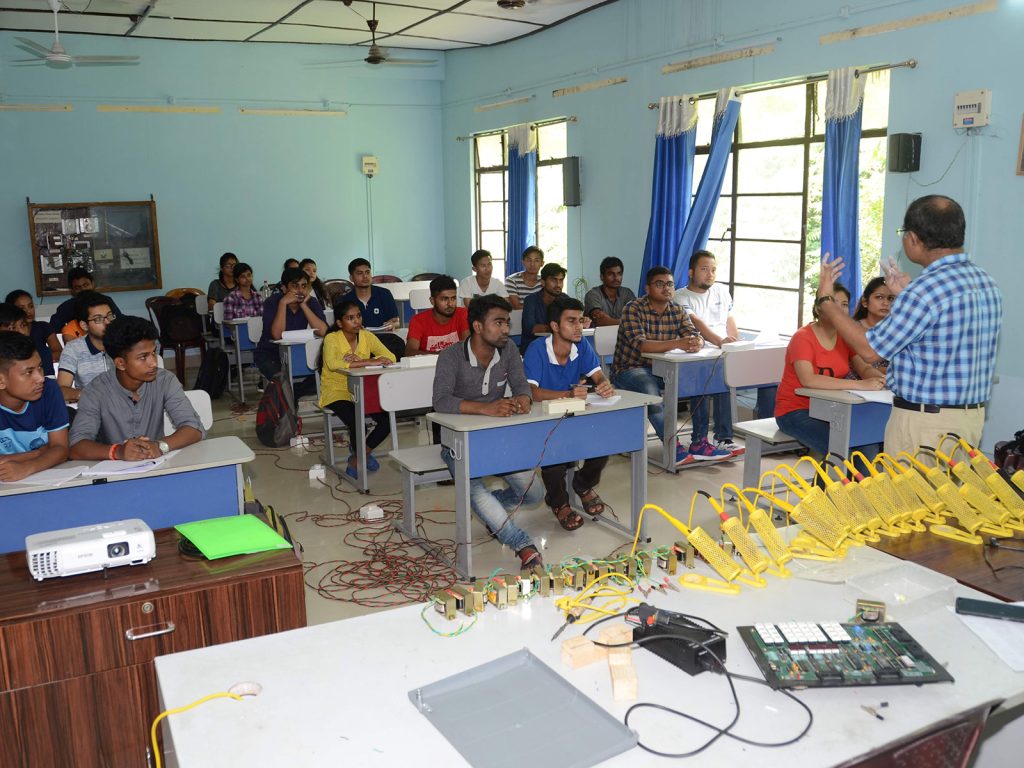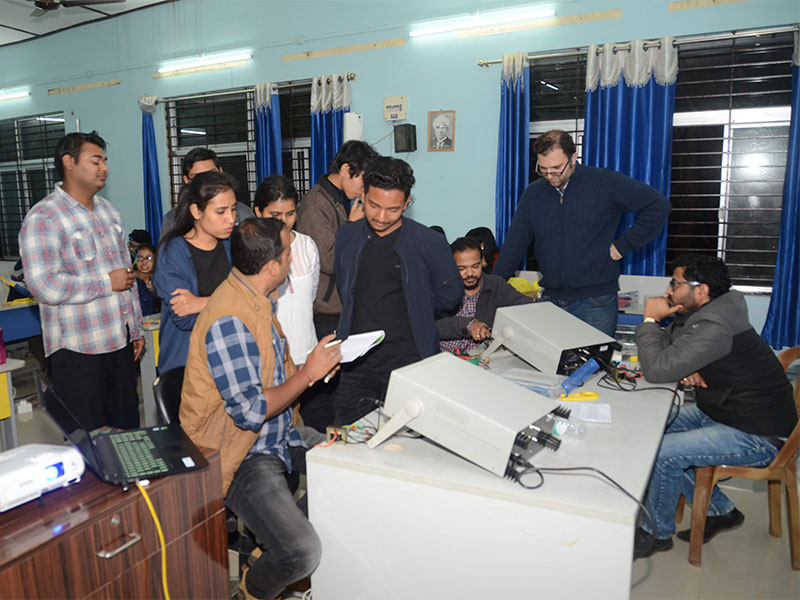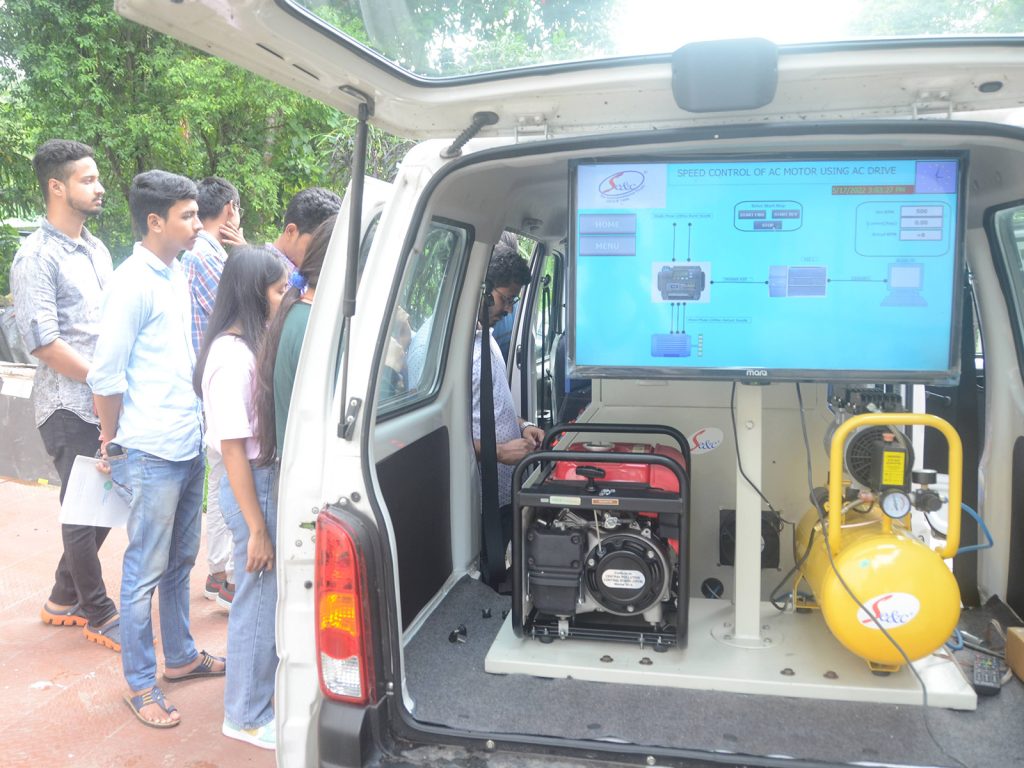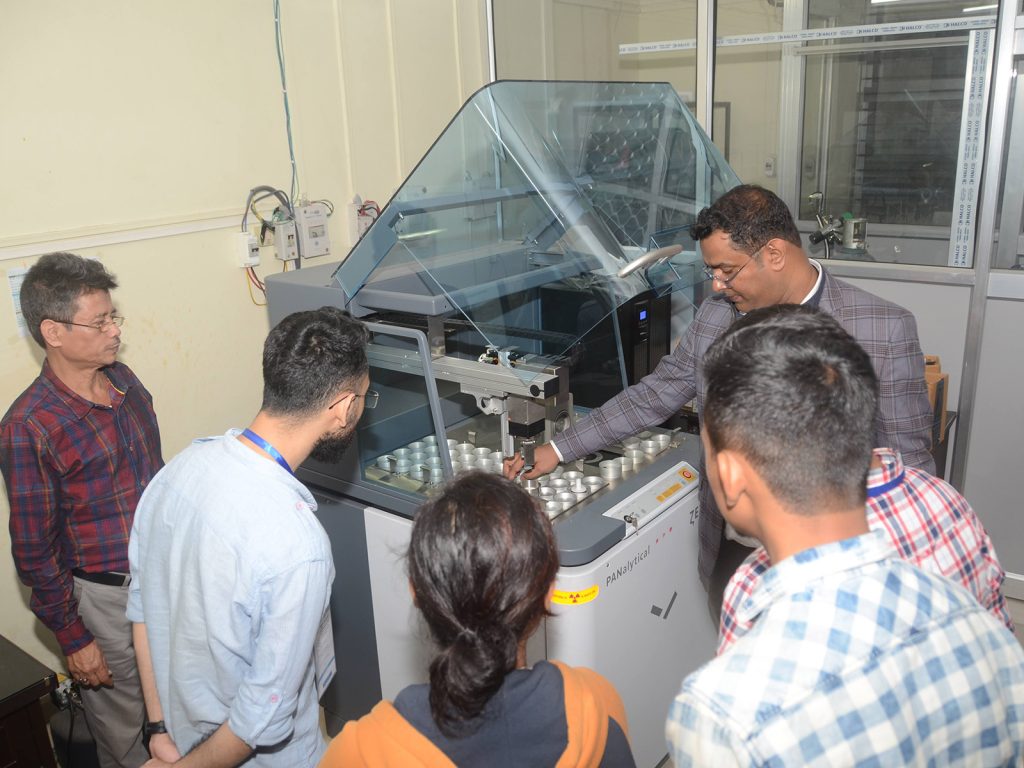
The Internship Programme offered by the Department of Instrumentation & USIC is a carefully structured initiative designed under the framework of the Four-Year Undergraduate Programme (FYUGP) and Five-Year Integrated Master’s Programme (FYIMP).
This programme is tailored to enrich students’ academic foundation with essential hands-on experience, preparing them for industry, research, and advanced innovation. Our goal is to cultivate strong technical proficiency, critical thinking, and real-world problem-solving abilities among students through guided exposure to sophisticated tools, design platforms, fabrication techniques, and analytical instrumentation.
This internship includes participation in the Workshop 9th School on System Design Using Microcontroller. Students enrolled in the 120-hour internship do not need to apply separately, as the workshop is already included.
Fee and Intake
- Intake: 20 students per batch
- Fee: ₹2000 per student.
Account Details for Payment:
| Account Name: | Head, Dept. of Instrumentation & USIC |
| Account Number: | 1839010049081 |
| IFSC: | PUNB0183920 |
| Bank: | Punjab National Bank |
| Branch: | Gauhati University, Assam -781014 |
How to Apply
Applications are currently open for the June – July 2026 Batch (120 hours intensive internship).
Interested students can submit their applications through the official form linked below.
Event Brochure: Click Here
Application Deadline: 23 May 2026
List of Selected Students published on website: 31 May 2026
The programme is scheduled to be held from 22 June 2026 to 18 July 2026.
- The internship fee is fully refundable if the applicant is not selected for the programme.
- Applicants may also upload a copy of their CV/Resume (optional), especially if they wish to highlight any relevant skills or project work.
Things to Keep Ready:
- 1st Semester Marksheet (Compulsory)
- 2nd & 3rd Semester Marksheets (Compulsory if results are declared)
- Payment Proof (Screenshot or PDF of payment receipt)
- College ID Card (If not available: A signed proof of identity from your HoD)
- ABC ID (If you don’t have one, create it at abc.gov.in)
For any queries or additional information, please contact:
Nairit Barkataki
Coordinator, Internship Programme
Department of Instrumentation & USIC, Gauhati University
Programme Structure
Duration & Flexibility
- Option 1: 6 months (1 day/week, 5 hours per day)
- Option 2: Intensive 120-hour summer session (June–July, 5 hours per day)
Credits
- 2 credits for a 60-hour internship
- 4 credits for the full 120-hour internship
Learning Modules Summary
| Module No. | Title | Duration | Focus Area |
|---|---|---|---|
| 1 | Test and Measurement Equipment | 5 hours | Operation of multimeters, oscilloscopes, function generators, and LCR meters for circuit diagnostics. |
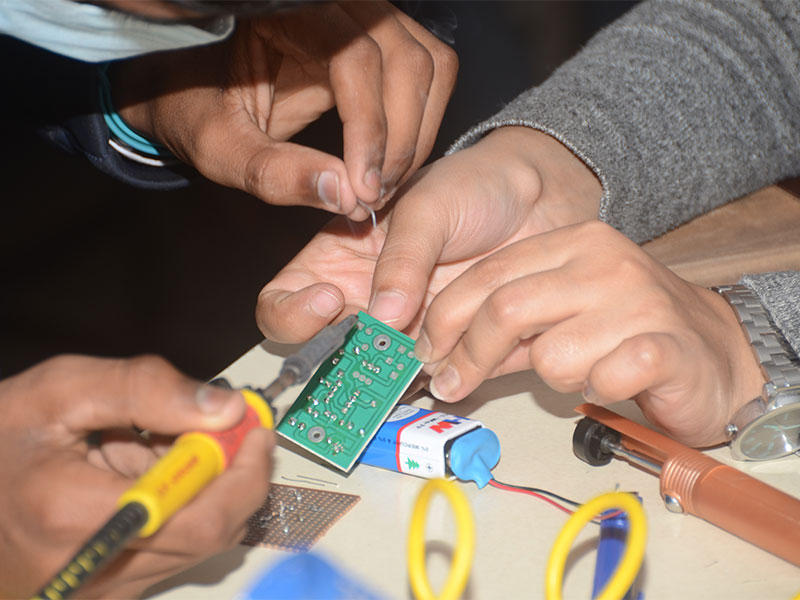
| 2 | Soldering Practice | 5 hours | Practical training in through-hole and SMD soldering, desoldering, rework, and assembling basic circuits. |
| 3 | Computer Repair and Troubleshooting | 10 hours | Identification and resolution of common hardware issues in desktop systems including power, storage, and OS faults. |
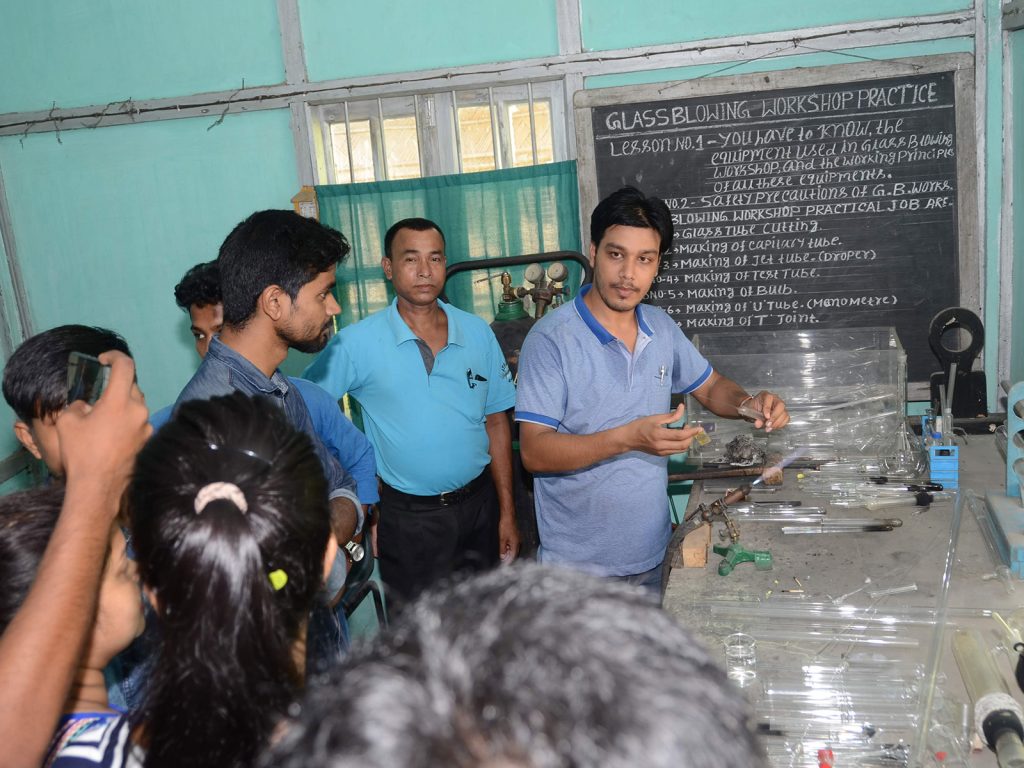
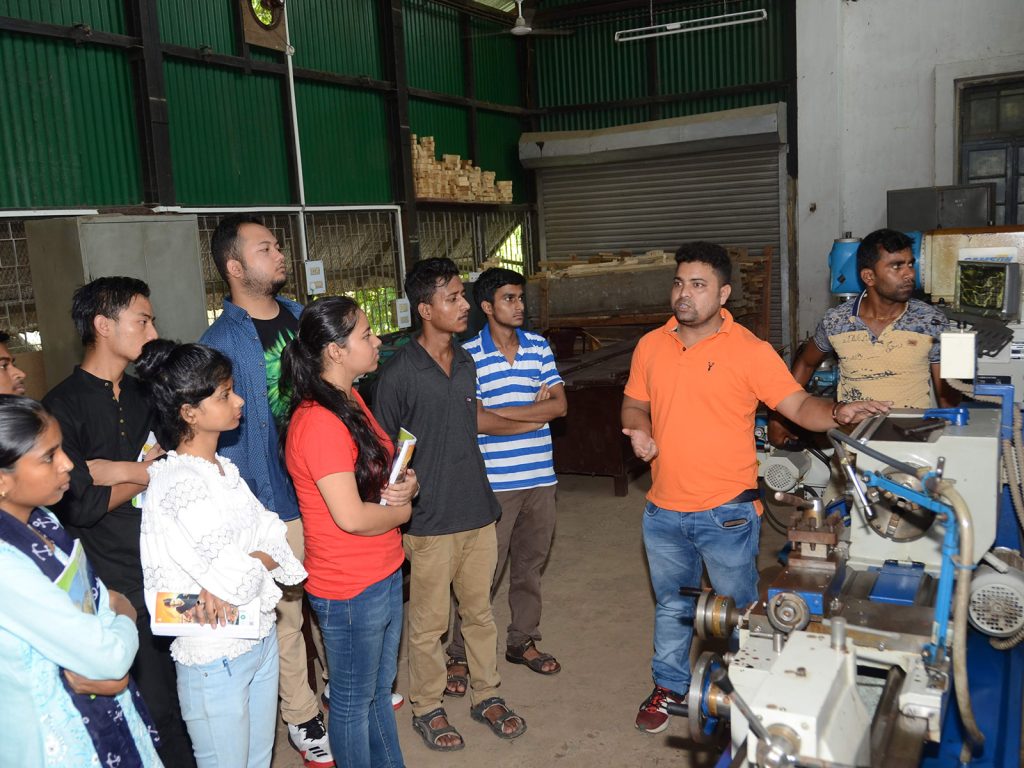
| 4 | Workshop on Basic Engineering Tools | 10 hours | Hands-on experience with carpentry, glassblowing, machining, and welding for engineering fabrication. |
| 5 | PCB Design and Fabrication | 15 hours | Circuit design using CAD tools, layout optimisation, Gerber generation, and optional manual prototyping. |
| 6 | 3D Design and Prototyping | 15 hours | Sketching and modelling with CAD software, assembly simulation, and 3D printing of designed components. |
| 7 | SAIF (Analytical Instruments) | 10 hours | Introduction to advanced analytical instruments (XRD, XRF, TGA, DSC) and material characterisation. |
| 8 | Antenna Systems | 10 hours | Fundamentals of RF propagation, design and simulation of microstrip patch antennas, and performance testing. |
| 9 | ST Radar Technology | 5 hours | Basic radar principles, Doppler effect, and live analysis of weather data using ST Radar systems. |
| 10 | Virtual Instrumentation | 10 hours | Graphical programming with LabVIEW, circuit simulation, and use of NI VirtualBench for signal acquisition. |
| 11 | Industrial Automation Systems | 10 hours | Introduction to PLC programming, industrial sensors, HMI, SCADA, and real-time control system development. |
| 12 | Nano Synthesis Demonstration | 10 hours | Bio-synthesis of nanoparticles, surface analysis using FE-SEM and AFM, and discussion on nanotech applications. |
| 13 | Assignments and Assessment | 5 hours | Evaluation based on reports, presentations, hands-on exercises, and overall learning outcomes. |
Learning Module Details
The internship consists of 12 primary modules followed by assessments. Each module provides hands-on exposure with clearly defined objectives and real-world use cases.
Note:
The modules listed above represent the planned structure of the internship. Based on the availability of laboratory resources, faculty expertise, and the specific needs of the batch, additional topics may be introduced, and some topics may be modified or replaced with equivalent alternatives to ensure an optimal hands-on learning experience.
Module 1: Test and Measurement Equipment
Duration: 5 hours
Highlights:
- Operation of multimeters, oscilloscopes, LCR meters, and function generators
- Safe measurement of voltage, current, frequency, and phase
- Fault diagnosis in electrical circuits
Real-world Applications:
- Diagnosing errors in amplifier and sensor circuits
- Calibration of lab instruments
- Repairing or tuning signal-processing hardware
Module 2: Soldering Practice
Duration: 5 hours
Highlights:
- Training in through-hole and surface-mount soldering
- Desoldering, circuit assembly, and rework techniques
- Assembly of a working test circuit
Real-world Applications:
- Building functional breadboards and final prototypes
- Assembling custom PCBs for student projects
- Creating reliable and durable hardware interconnections
Module 3: Computer Repair and Troubleshooting
Duration: 10 hours
Highlights:
- Diagnosing power, storage, and OS-related hardware issues
- Advanced troubleshooting for motherboards, RAM, GPUs
- Safe component handling and system optimisation
Real-world Applications:
- Building and maintaining lab computers or Raspberry Pi clusters
- Repairing departmental or institutional computer systems
- Supporting basic IT infrastructure in engineering setups
Module 4: Workshop on Basic Engineering Tools
Duration: 10 hours
Highlights:
- Hands-on carpentry, glassblowing, machining, and welding
- Introduction to fabrication using real-world materials and tools
- Understanding the role of materials in instrumentation
Real-world Applications:
- Fabrication of mechanical supports or sensor housings
- Custom design of laboratory glassware and experimental rigs
- Developing hardware enclosures and mounting systems
Module 5: PCB Design and Fabrication
Duration: 15 hours
Highlights:
- PCB design using CAD tools (e.g., DipTrace/KiCad)
- Schematic creation, layout routing, and Gerber generation
- Hands-on prototyping and optional manual etching
Real-world Applications:
- Designing a regulated power supply PCB
- Fabrication of signal conditioning circuits for sensors
- Designing amplifier boards or logic interface circuits
Module 6: 3D Design and Prototyping
Duration: 15 hours
Highlights:
- Sketching, modelling, and assembly using CAD software
- Understanding constraints, motion simulation, and exporting for 3D printing
- Introduction to slicing software and 3D printing workflow
Real-world Applications:
- Designing sensor enclosures or robot chassis
- Prototyping custom instrument mounts and control panels
- Developing ergonomic device casings or wearable designs
Module 7: Sophisticated Analytical Instrument Facility (SAIF)
Duration: 10 hours
Highlights:
- Training on XRD, XRF, TGA, and DSC instruments
- Sample preparation and result interpretation
- Application of analytical techniques in materials science
Real-world Applications:
- Identification of crystal structures in metallurgy and semiconductor devices
- Quality control in pharmaceuticals using thermal analysis
- Research in nanomaterials and polymers
Module 8: Antenna Systems
Duration: 10 hours
Highlights:
- Fundamentals of electromagnetic radiation and antenna parameters
- Simulation, design, and fabrication of patch antennas
- Measurement of return loss and radiation pattern
Real-world Applications:
- Development of Wi-Fi or GPS antenna modules
- Integration into UAVs or weather monitoring systems
- RF modules for IoT communication
Module 9: ST Radar Technology
Duration: 5 hours
Highlights:
- Introduction to Doppler radar and wind profiling
- Live demonstration of radar signal transmission and reception
- Interpretation of real-time meteorological data
Real-world Applications:
- Weather radar analysis for climate studies
- Radar-based object detection in smart transportation
- Understanding signal reflection in communication systems
Module 10: Virtual Instrumentation
Duration: 10 hours
Highlights:
- Use of NI VirtualBench and LabVIEW
- Basics of circuit simulation and virtual testing
- Creation of simple data acquisition systems
Real-world Applications:
- Implementing real-time monitoring systems for labs
- Simulating and debugging circuits before physical prototyping
- Building a virtual oscilloscope or voltmeter system
Module 11: Industrial Automation Systems
Duration: 10 hours
Highlights:
- PLC fundamentals, industrial sensors, and HMI interfaces
- Ladder logic programming and SCADA integration
- Mini-projects using automation hardware
Real-world Applications:
- Automation of small-scale processes (e.g., temperature control)
- Real-time industrial sensor monitoring systems
- Development of smart plant models for demonstrations
Module 12: Nano Synthesis Demonstration
Duration: 10 hours
Highlights:
- Bio-synthesis of nanoparticles using plant extracts
- Characterisation using FE-SEM and AFM
- Discussion on environmental and biomedical applications
Real-world Applications:
- Creating eco-friendly antimicrobial coatings
- Research in nano-drug delivery and environmental sensors
- Material science projects involving nano-engineered materials
Assessment and Certification
Assessment Components
- Assignments & Hands-on Tasks
- Internship Report & Documentation
- Presentation & Viva Voce
- Skill Acquisition & Practical Competency
Attendance: 100% attendance is expected across all internship sessions and activities.
Certification: Students must achieve at least 50% overall to receive the certificate. Certificates will list completed modules and performance. Outstanding performers may receive awards for innovation or technical excellence.
Eligibility Criteria
- Open to undergraduate and postgraduate students from Gauhati University and other science & technology disciplines. Preference will be given to undergraduate students of FYUGP / FYIMP.
- Prerequisites: Basic understanding of electronics; Willingness to engage in hands-on tasks; Report writing and documentation skills
FAQs
Q: Can I choose only specific modules instead of all 12?
A: Yes, you can complete 60, or 120 hours depending on your credit needs.
Q: Will I receive a certificate for individual modules?
A: You will receive a consolidated certificate listing all completed modules.
Q: Can students from other departments or institutions apply?
A: Yes, the programme is open to all eligible science/engineering students.
Q: Are hostel facilities available during summer?
A: Hostel accommodation is not included as part of the internship programme. Students will need to arrange accommodation independently.
Glimpses from past events: